Barry Wren, now in his nineties and still writing prolifically, has devoted his life to the welfare of women, delivering their babies, attending to their needs, helping them understand the changes in their lives as biology plays its hand and encouraging the rest of the medical profession and the general community to understand them. So long, through the course of history, Barry maintains women have been misunderstood, used and cast off when no longer needed.
He is still very close to his subject. For years he has lived in a heritage-listed part of the old Royal Women’s Hospital in Paddington. He sees there is still need, in this so-called enlightened age, to put before the public the facts of what they are dealing with. If Wesley College was part of the enlightenment process, admitting women for the first time in 1969, and has long adopted an egalitarian policy, Barry believes we still have a long way to go, especially in the way we regard and deal with women who have aged or entered of passed their menopause. His most recent publication, Sex (for females only), adding to a longlist of his publications, is an attempt to put things into perspective. “The main purpose in writing my last book was to demonstrate that nothing has changed over the past 5,000 years as young attractive nubile females are still being used as a commercial commodity by males (fathers and mothers too) with sexuality being the main item for purchase,” he told The Wesleyan.
In past ages, the beauty of women was often the centre piece of conflict, Barry said. “Wars were fought over them. In historical times, the beauty of women was highly regarded. But by the time they were 30 or 40, they were regarded as used and they were disregarded and told to go somewhere else. Women were sold and trained to be sexual partners from the age of 10. Their best years were spent by the time they were 20 years of age.” There were many instances, now as there were thousand so years ago, where a woman used her beauty to enveigle herself into the life of a man with assets and capitalised on that. But Barry maintains that women taken over all have been at a distinct disadvantage. In Barry’s view of things, males have always taken the lead, women have been put in a subordinate role. The very culture of our society, beginning with the story of Adam and Eve, where Eve was the first to eat of the apple and enticed Adam to join her, thereby earning herself universal opprobrium. In the broad spectrum of history, including practices of the ancient world, women have at times been bought and sold as chattels, some daughters sold into slavery. Men have had a practice, which continues to this day, of taking a young woman, using her sexually, then casting her off in favour of a younger woman. Left alone, many older women were left to fend for themselves, often pushed to the sidelines and even, in historical times, when they were old and shrivelled, declared to be witches
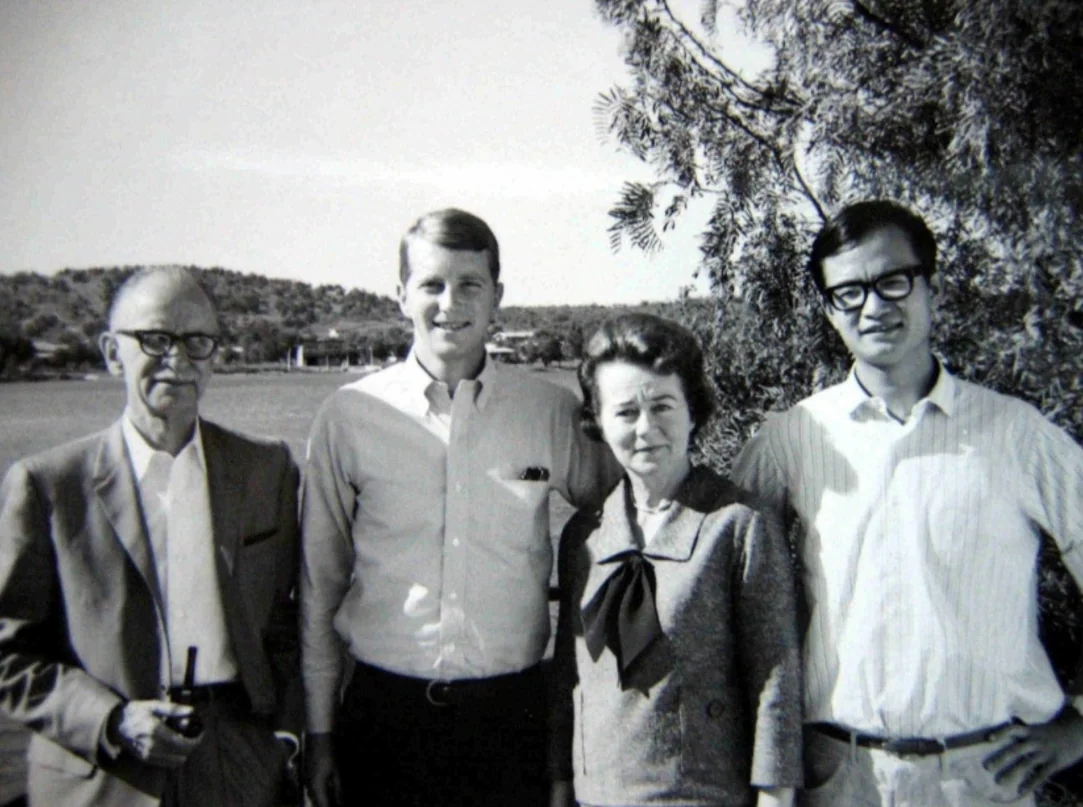
Barry George Wren, whose heritage includes an ancestor transported to Australia for highway robbery, was born in Canowindra in western NSW on April 8, 1932. The son of a barely educated wheat farmer, George Brien Wren, he grew up on a sheep station near Nyngan in the state’s far west. He did his early schooling by correspondence, then attended Hurlstone Agricultural High School, won a Commonwealth Scholarship, decided virtually on a whim to do Medicine, and entered Wesley College. On his admission he was somewhat naïve and, not having an early grounding in Physics and Chemistry, struggled in his early years. Graduating in 1955, he married a secretary, Loloma Cochrane in 1957, with whom he would have three sons. He decided to specialise in Obstetrics and Gynaecology and embarked on a career which led him in his early years to practise in Western Australia, the United Kingdom and Nigeria. In 1964, he became an associate professor at the University of New South Wales. “From the time I was at the King Edward Memorial Hospital in Perth, I had been interested in gynaecological endocrinology and its influence on the development, growth, maturation and health of women,” he said. “However, it was not until I returned to Sydney and had a university appointment allowing me access to research facilities, my own clinic and appropriate facilities that I was able to explore some of my ideas.”
Barry’s years of teaching and research included a period of study at the Regional Teacher Training Centre in Chicago. He lectured all over the world, including Italy, the Caribbean, the United States, France, Belgium, Canada, Switzerland and Brazil, and all over Australia. “It was only in the 1970s that I realised that I could improve the health, welfare and enjoyment of life by older women by using my knowledge of endocrinology and the significance of hormones in not only developing beautiful adolescent females, but that many of the sexual attributes could be maintained in aging females by appropriate hormone therapy,” he said. “I became one of the originators, not only in Australia, but in the world as a small group of gynaecologists and endocrinologists who formed the International Menopause Society.” He opened the first public Menopause Clinic in Australia at the Royal Hospital for Women in Paddington in 1978.
Barry said that going through history, the changes in bodily functions had been misunderstood. Menstruation had been seen as discharging bad humors. When at the change of life, the woman ceased menstruating, that was seen as the onset of aninability to do that, and the changes in attitude and behaviour of women during menopause was seen as evidence of that. In fact, in ancient times the “hyster”, which was the uterus, was regarded as linked to the brain and when the uterus ceased to function as it had been, the change in the woman’s behaviour was seen as “hysterical”. There had been such misconception in the past and brutal remedies. One solution to stop menstruation was to remove the ovaries and in the methods used, render the woman insensible by administering ether, then ripping out those parts, often resulting in the death of the woman. And those who survived became post-menopausal in their twenties. This might be an extreme example, and it is in the past, but there is still need for education. In his continuing search for ways to redress injustice, Barry initiated a gynaecological clinic for Indigenous Australian women in Redfern, as well as a gynaecological clinic for women in the Women's Prison in Sydney. In 1988, having organised meetings of those Australian doctors interested in the health and management of post-menopausal women, Barry became the foundation president of the Australian Menopause Society.
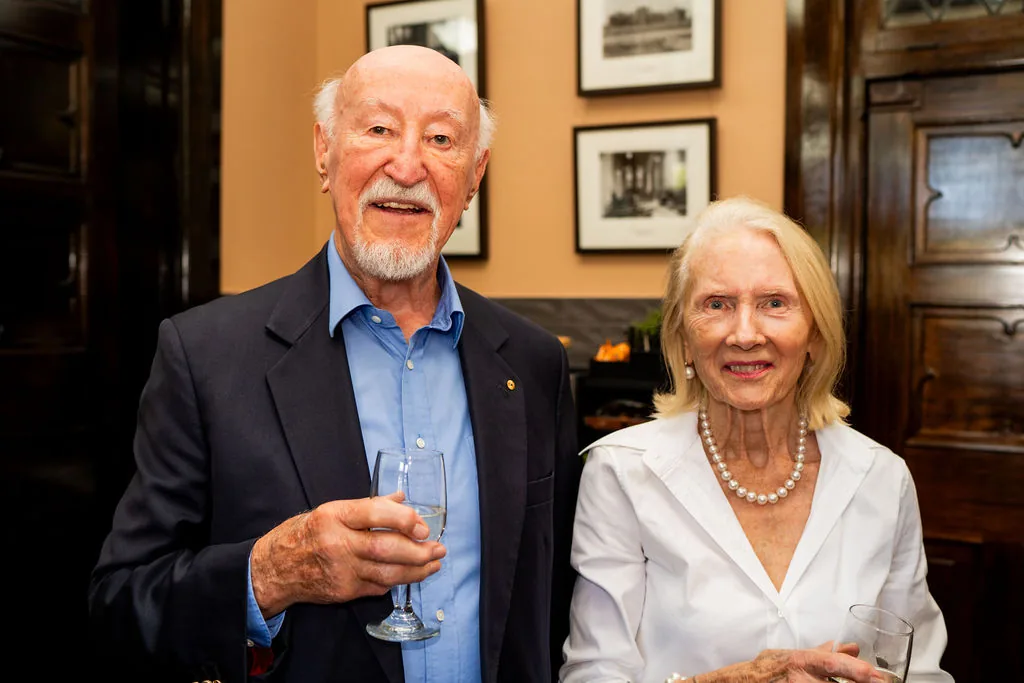
[AB1] Barry has written numerous books, including Menopause, Change, Choice and HRT, Fast Facts Menopause, Understanding Menopause and Hormonal Therapy, Clinical Management of Menopause and Your Choice A Guide to Menopause and Hormone Replacement Therapy. In 1997, he was awarded the Australian Menopause Society Medal of Distinction and in 1999 the Australian Government recognised his service to the health of women by awarding him Member of the Order of Australia (AM). Now in his early nineties, a widower for the past 20 years, Barry retains a connection with Wesley College, delights in his three sons, Graham, David and Michael, and two granddaughters, Rachel and Sophie, Sophie being a midwife. He has the company of Lorraine (Rainie) Pountney, widow of a professional colleague, and has no interest in slowing down.
.webp)
.webp)